Sunday, October 01, 2006

Transfagarasan Pass - Carpathian Alps - Route from Wallachia to Transylvania

Transfagarasan Pass
Carpathian Mountains


Carpathian Mountains, Transfagarasan Pass, Romania

1.  Blasting open the Pass

The Fagaras Mountains, are part of the Carpathian Range.  Wallachia is on one side (Vlad was Wallachian) and Transylvania on the other.

There is a history of hardship and labor deaths here, from blasting a way across and through a tunnel, for vehicles. See http://www.expeditionplus.com/2006/07/the_fagaras_mountains_and_the_1.

The Pass was built as a way to move troops and ammunition to defend against a feared Soviet invasion, 1968. The Transfagarasan Pass, through and over the Transfagarasan Mountains, is more easily remembered by the name of the town at the north side, Fagaras. See http://www.transylvania-discovery-tours.ro/en/top/daily-tours-in-transylvania/land-of-fagaras-day-tour/

2. Accessibility

The Pass in these mountains is open as weather and season permit.

There is a sign at a town in the southern end of the road, at Curtea de Arges, that will give the information, we now hear.

We didn't know that, but went up anyway with the intention of using common sense, and turning back if the road was closed. This was the end of October - lovely for leaves, not quite New England, but fine.  The fine weather below can be misleading. Again, before going toward the Tranfagarasan Pass, check that the entire road north is open through the Carpathians. It closes seasonally, and depending on the weather. The gap on maps signifies tunnels, against rock slides and snow.

3.  Accommodations

Cabanas is the magic word. There are hotel-type places for sleeping, called Cabanas. Are they government-run? Not sure.  Just don't let it get dark on you. Stop in time. For an overview of the mountains in Romania, see "Romania's Road to Heaven," at http://www.escapeartist.com/efam/68/Living_In_Romania.

On the way, we knew there would be "cabanas" or small hotels, but did not expect the distances between. Don't wait too long in the day to stop. You need all the visibility you can get - not all vehicles have good headlights, and animals may wander in the road. We were just about to turn back, when one appeared. Do not expect signs to tell you when the next will emerge.


At the northern end of the pass are Sighisoara, the birthplace of Vlad III Tepes, and Sibiu; entry to the painted monastery areas, and much more. See Romania Road Ways.


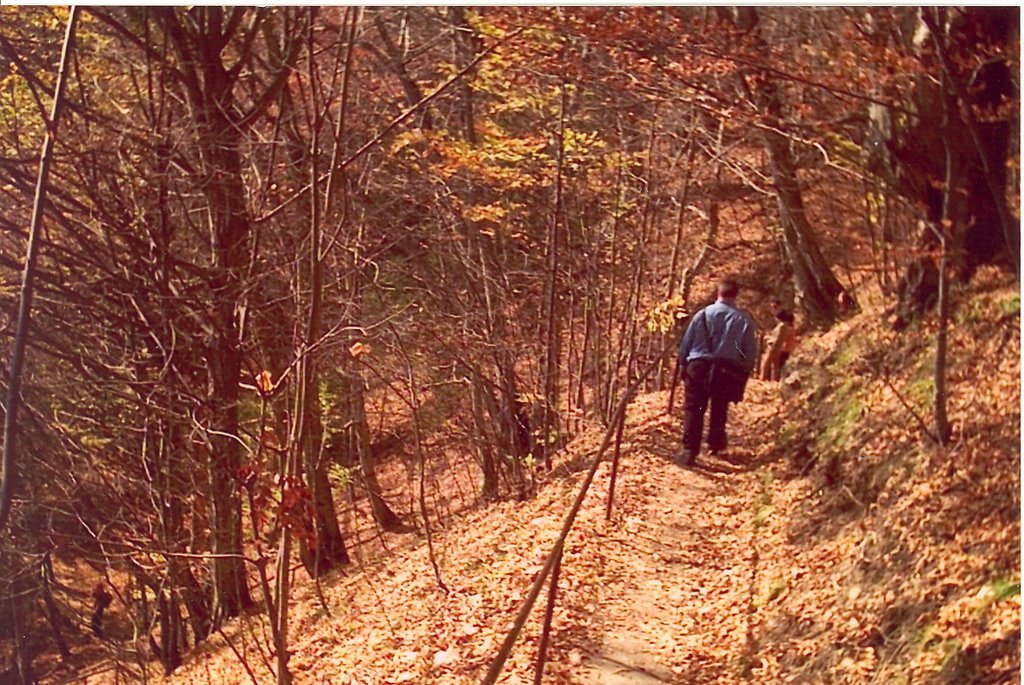
Transfagarasan Pass, midday hike, Romania

Start early the next day.  There are hairpin turns, incredible cliffs and a winding road.

We took our time the next day. Stop along the way and take a hike. If you are a worrier about leaving the car, you will miss out. We never had a problem. How long will that last? There is the Car half of the Car-Dan Tour Company, snapped by the Dan, crossing a boulder-strewn creek bed with no particular destination in mind.


Then, in the distance and above, is the Vlad Tepes castle, where he sought to defend against the invading Ottomans.
This site does not name Poinari Citadel, however; but tells the story as he escapes to another castle at Targoviste.  See http://www.davidstuff.com/historical/vlad.htm; and the more touristy http://www.romaniatourism.com/dracula-legend.html

Vlad Tepes castle ruin, Poinari Citadel, Transfagarasan Pass, Romania

The castle ruin is to the left, on the mountaintop.

This Carpathian area is historically central to any trip to Romania, whether focusing on Vlad or not. His actual castle up here, one of them, is a fine attraction, but there is much else to see. See http://www.expeditionplus.com/2006/07/the_fagaras_mountains_and_the_1.


More blogs about Romania Road Ways Vlad Tepes - Impaler.

Saturday, September 30, 2006

Poinari Citadel, ruin of castle of Vlad III Tepes (Transfagarasan Pass)


Poenari Citadel, Poinari Citadel.
Castle Ruin, Vlad Tepes
Phonetics change spellings. Search various ways.

Vlad's real castle.

At the top of the mountain is the ruin of the actual castle of Vlad Tepes, where he defended against the Turks, then escaped. His wife, however, had already hurled herself from the parapet in despair, and in fear of being captured. The site is known as the Poenari Citadel. See http://www.draculascastle.com/html/poenari.
.
1.  Getting there.
.
Watch for a small parking area below, few signs if any, near a utilities complex in the valley.  There is a manageable walk up a long S-curves; and there are even some long stair steps at places on the pathway. This is not a climb, just a long, long walk.

Dan Widing, Poenari Citadel path, Castle, Vlad Tepes, Romania
.
Some buses or vans with tourists arrived after we started up,, and a small group was ahead.  We often had to leave the car far behind, and just trusted it would be there. It always was, and no reason for concern except our own.
.
The ruin is good for climbing around, but not extensive in size.
.
The path is safe, with a pipe-type railing to keep you on track. A group of Romanian teens behind us called the rail The Great Wall of Romania. Lots of laughs - Japanese tourists were ahead of us. This is clearly a worldwide attraction, but not crowded in October.
.
.
2.  Guides.
.
These are not really needed, because there are signs and pathways, but expect someone to join you and expect a payment. We did that, and I only regret not giving more.  Sometimes, however, with a larger tip, there is more intrusion as the guide wants to be sure you get your money's worth.
.
Our guide appeared when we were just about at the top, from a little house up there. Do carry some dollars for people who are especially helpful. They really want them, and deserve to be compensated. I tended to tip in Romanian currency, however. Dollars: There is a midground to caution. I do wish I had been more generous with other individuals, like older women sitting asking for money at the monastery gates.
.
3.  Arefu - the village that spirited Vlad away
.
View from Poenari Citadel, Castle ruin, Vlad Tepes, Romania
.
Vlad escaped with the help of villagers at Arefu nearby. I understand that the villagers still identify with that event and can name the individuals and their descendants.

Vlad rewarded them with land, an unusual step for peasants. For an account of places and his life, see the Vlad sites at http://www.ucs.mun.ca/%7Eemiller/vlad_romania.  Someone slept out up there. See http://www.ventureup.com/travel/dracula.
.
View from the ruin itself, to the road below.


Friday, September 29, 2006

Vlad and current events: Uses of extreme interrogations, torture for political ends

Poinari Citadel
Ottoman Invasions of Romania

Vlad Tepes III engaged in torture, to preserve law and order, for which his citizens were grateful, and to fend off the invading Ottomans, for which his citizens were also grateful. Biography: at http://www.thenagain.info/WebChron/easteurope/Dracula.CP.html  His form of impalement was the Persian, through-the chest-breastbone area, judging from the woodcuts. See, if you must, http://www.wordiq.com/definition/Impalement

That worked for about 40 years. He is revered in Romania, as far as we could tell. See post. Still, his tactics did not last. The drastic measures just gave a reprieve until the Turks regrouped and came again. See Romania Road Ways

Needed now: 

Put the history of Romania and its reputation for torture and political repression in perspective. What uses do cultures make of pain, by whom, against whom, and why. Are we so far removed.   Is impersonal use of agent orange, or napalm, any more moral than impalement just because the victims of napalm are, or become faceless; and impalement is highly personal. Extreme interrogations: are those so much verbiage for torture but on an individual level -- any less worse?

Global Menswear - The Cap. Measure by Pi. Poenari Citadel


 The Driving Cap
The Practical Cap at Poinari Citadel

Universals in travel.  The men's driving cap. See it here at Vlad's castle ruin in Romania, worn by The Guide.

Many of us know little of the stitcheries of driving caps vs. newsboys' caps, and other similar caps around the world. The fashion is global because it is practical, the cap is easy to carry, stays on, and looks good.


Style details.  We understand this about details: the well-designed and well-fitting cap accommodates base of skull to hairline, no puckering.  It should be stitched (not snapped) at the front (we do not recall here).  There should be three panels to be a driving cap, and more like eight for the more circular, wider newsboy's cap.  Think of the 1930's - kids on the streets hawking papers.

Sometimes there is a buckle in the back.  The longer the brim in front, the tougher the look.  This fine guide, who lives near the ruin, was gentle and had a welcoming cap.

Measuring for a driving cap.  What is your size?  For a European cap, measure your head, say in inches for Americans, then multiply that times 2.54;  or, for an American cap, divide by 3.14 or pi.

Thursday, September 28, 2006

Sighisoara, Vlad's Birthplace; World Heritage site


Sighisoara: Birthplace of Vlad Tepes
The Home is now a Restaurant

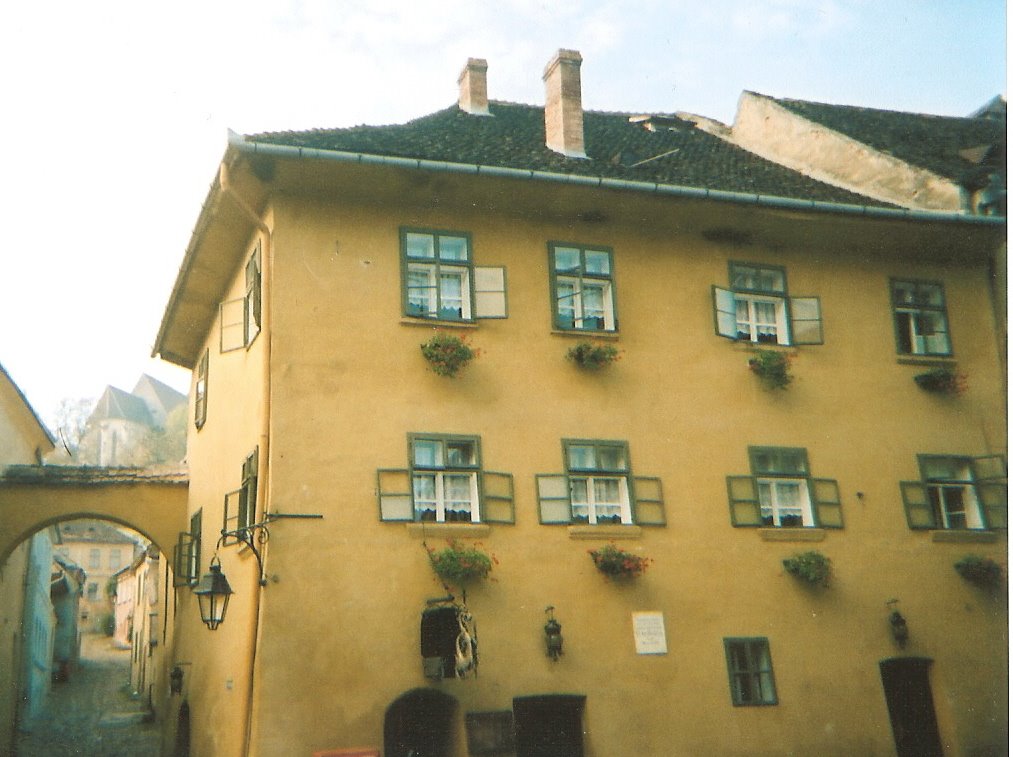
1.  Birthplace: The big yellow house.

The home where Vlad Tepes was born in 1431 is now a restaurant. Expect and get generous portions of good basic food. Sauces and frills are few, so the atmosphere seems authentically Romanian.

The town is in excellent medieval condition, never bombed, or overrun. See the photo gallery at http://www.world66.com/europe/romania/sighisoara/lib/gallery.Although he ruled Wallachia for periods in a brief timespan, 1456-1462, his reputation suggests a far longer domination.

2.  Monuments and The Novel.

There are references to Vlad Dracula in many places, and they often refer to the novel, "Dracula", by Bram Stoker, even though it is far removed from the life.  Reread the Stoker novel at Dracula, http://www.literature.org/authors/stoker-bram/dracula/

As in other Romanian cities with ties to Vlad Tepes, there are excellent descriptive plaques in Sishisoara. They separate out the kitsch, giving historical information particularly where Bram Stoker made other claims. The result is to interest people who want to know what really is known, or reasonably so; as well as those who want to follow in Bram Stoker's characters' steps without critique.

There are entire tours devoted to Vlad. The Romanian Tourist Bureau provides an overview of his life as told in legend. See http://www.draculascastle.com/html/poenari.

3.  World Heritage

Sighisoara is a World Heritage site. See http://www.romanianvoice.com/images/orase/sighisoara.php. The full list of places on the Romanian World Heritage honor roll is at http://www.thesalmons.org/lynn/wh-romania.


Monday, September 25, 2006

Bistrita, Piatra Fontanele and Hotel Castel Dracula: Bram Stoker's Dracula Story

 Bistrita
Bram Stoker's "Dracula"

Bistrita is the town located near the area where the "Dracula" author, Bram Stoker, located his fictitious Dracula's castle.

His character, Jonathan Harker dined at the Golden Crown here.  Bram Stokerwas born in Dublin -  see http://www.online-literature.com/stoker/. This is the Literature Network site.

1.  Weekend slowdown.

On weekends in Bistrita and other towns, things do close down, so don't plan for museums or sites after lunch and especially on Sundays. Find an overview of the town at http://www.museum.ici.ro/transilvania/bistrita-nasaud/english/istoria%20oras.

A walk around was all we wanted.

2. Hotel Castel Dracula

It was time for kitsch, so we stayed here.  The good news is that the kitsch is restrained, and localized. The rest of the accommodation is a fine hotel, although in need of some repair. 

Hotel Castel Dracula, near Bistrita, Romania

Hotel Castel Dracula is to the east, past Bistrita, and supposedly at the place where the fictitious castle in the novel, Dracula, was supposed to be located.


3.  Kitsch

The hotel has a secret passageway and room, that you have to search for yourself and then - gasp - it is there. The Coffin. And cape for dressing up.


Dan Widing locates The Coffin, Hotel Castel Dracula, Romania

Other than that, it is a full-service, comfortable hotel: good food, books for sale in the lobby, much research on the Stoker's Dracula-Vlad comparison.

Wish for a foggy morning so that driving is risky. The horsecarts are a hazard despite reflectors.

Then you will have to stay a few hours longer, and curl up with a good book.

4.  Hiking Center

The hotel has been discovered by serious hikers. It is near a wilderness park, with Big Animals (real wolves and bears), and the trails look great.

5.  Games

There is also a pool table and pub up the tower. For enviro-tourists, despite the touristy name Castel Dracula, stay here as your base for side hikes. Any big facility needs upkeep, and they are working on it.

Other accommodations:

6.  Warmth

We had no difficulty with cold nights.

Usually we stayed at any family pensione, or a "cabana" in outlying areas. A cabana is like a villa, small hotel-hostel-pensiones for travelers, at well-spaced intervals in mountain or recreation areas. All clean, safe, warm, with thin compact mattresses, but plenty of felted blankets in the duvets. The felted blankets, think heavy, tight wool blankets, soaked and dried several times to tighten it up and make the felt, very thick - not like hats. We sometimes put the additional duvet underneath.

Wednesday, August 23, 2006

Resources: Reading list, chronology, reference sites, compare to Bram Stoker "Dracula"

Overview - There is a historical Vlad III Tepes, who may or may not conform to your own acquired understanding of him. Please put him in his own setting, with the dangers he and his countrymen faced, with the practices of others in his time, and look for his other qualities as a ruler - not just his extreme law-enforcement or cruel deterrent practices. For people who like heavy deterrence, and believe in it, this worked for Vlad but only lasted several decades. The Turks (fill the slot with any other invader) were back. Torture is temporary, and has its backlash.
  • For a novel about Vlad, try The Historian, by Elizabeth Kostova, 2005, Little, Brown&Co.
  • Overview and photos, sites and related issues: www.donlinke.com/drakula/vlad/photos., for Vlad Photos, sites.
  • Narrative, chronology, facts and resource list at www.royalty.nu/Europe/Balkan/Dracula. I was interested to see that Vlad was raised by Turks, a hostage as a child, or at least whatever one calls a person who is being kept as a guarantee that the father will conform to what the holder wants. He may have learned much, early.
  • More photos and a journey log: www.dunwich.org/draculea/draculea. Also, photos at www.ciaoromania.com/draculatour.
  • Here is a site showing where many stories originated: www.tabula-rasa.info/DarkAges/VladTheImpaler. This is a horror-site, so if you get to the home page, please do not leave in disgust. Just go fast to the Dark Ages section then in the left menu, to Vlad. The written account there is ok.
  • Here, an overview with list of resources and footnotes. www.eskimo.com/%7Emwirkk/castle/vlad/vladhist.
The sites for Vlad III Tepes, Impaler, are fine to see, but may detract from the rest of Romanian culture and places. So we put the Vlad sites at their own blog.

Because any visitor will be constantly reminded of Vlad, here are some reading materials to help determine what is fact, with reasonable corroboration, and what is legend, and what is sheer fiction - literally, thanks to Bram Stoker, the author and his "Dracula."

Reading materals here, for your next trip to the library or on-line source:

1. Bram Stoker, "Dracula" (the nineteenth century novel)
2. Elizabeth Miller, "A Dracula Handbook," Gerot Publishing House, Bucharest, Romania (English version-973-96601-4-2) (among books recommended by the Transylvanian Society of Dracula)
3. Ioan Praoveanu, "Castle Bran," C2 Design House Publishing, Brasov,Romania, 1999
4. Raymond T. McNally and Radu Florescu, "In Search of Dracula, a True History of dracula and Vampire Legends," New York Graphic Society, Greenwich, Connecticut 1972.


We had these books with us:

1. Lonely Planet's "Romania and Moldova"
2. History of Romania (paperback, in the house here somewhere, well-dog-eared)

The Name - Vlad III Tepes

All the names and what they mean, collected from a collection of sites:

a. Vlad. First name. See members.aol.com/johnfranc/drac05.

b. III. His father was Vlad Dracul, or Vlad II, I understand, so this Vlad is Vlad III.

c. Tepes. Impaler. See www.royalty.nu/Europe/Balkan/Dracula.

d. Dracula. Dragon, as in Order of the Dragon, to which Vlad's father first belonged, then Vlad. See www.rodoslovlje.com/medieval_serbia/eng/history-dragon.

See www.donlinke.com/drakula/vlad. This is a good site for the historical Dracula.

Hunedoara: Johan Hunyadi - Vlad Contemporary, Ruling Transylvania

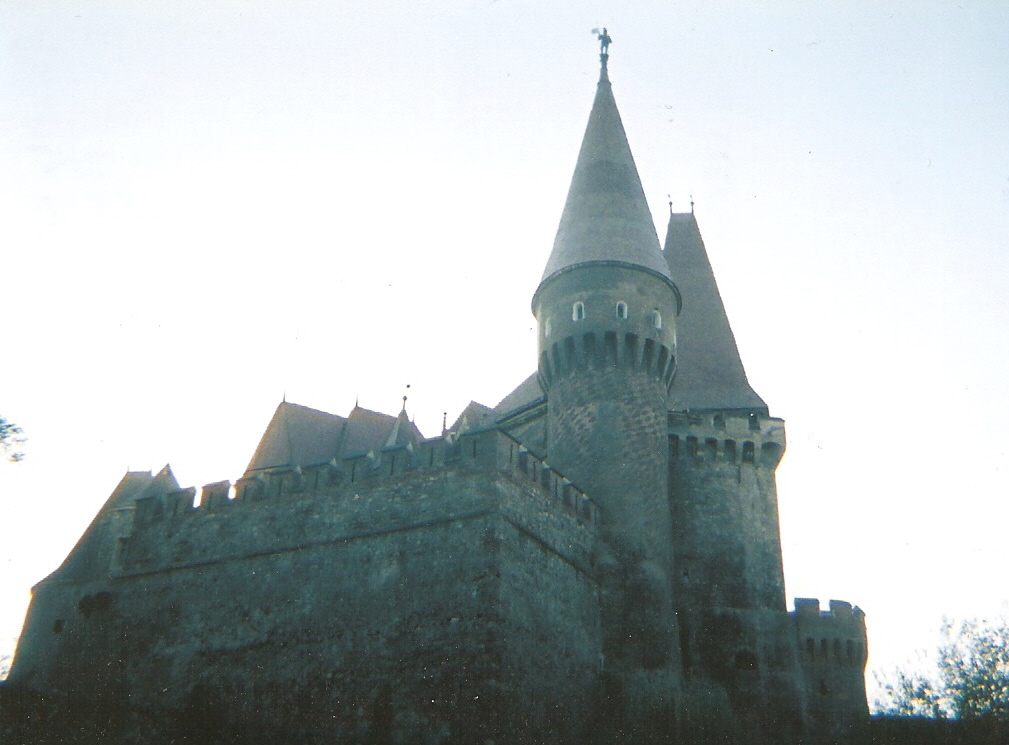
This is fabulous. Maybe the best castle in Europe. Never bombed, in process of a fine reconstruction of the wooden parts and others needing preservation. Location=terrible. Abandoned communist era factories all around. Go anyway.

Corvin Castle in the eastern part of Romania. Castle of Janos Hunyadi, Hungarian - allied with Vlad off an on, both against the Turks. Hunyadi also ordered the assassination of Vlad's father and brother.

Hunyadi ruled the northern Transylvania; Vlad ruled the southern Wallachia. Janos' son ruled after him. See Hunedoara Castle at www.world66.com/europe/romania/hunedoara. Janos Hunyadi - John Hundedoara (see Huneduara in Croatia) - or Johan, was a Hungarian nobleman and general who was appointed as administrator of the area by the Hungarian rulers in the 15th century. He repelled the Ottoman invasion for many years. See www.infoplease.com/ipa/A0107349.

Some sources credit Hunyadi with saving Europe because he halted the Turkish advance into southern Europe. See www.ucalgary.ca/applied_history/tutor/endmiddle/bluedot/hunyadi.

The castle is 14th Century Gothic, never bombed, never cannoned. The restorations are splendid. The surroundings, however, are eastern european socialist looming skeleton factories - no glamor entryway - but the trip is worth it. Watch out for heavy air pollution after Cluj Napoca and Deva. Asthmatics take inhalers, and do not even think about the fallout on crops, and that the animals are eating in the fields. People and vehicles barely visible in the smog. How will the EU help with health?

Best history site, History of Central Europe - Vlad Tepes and Romania

Go to the History of Central Europe at mysite.du.edu/~etuttle/misc/europe.htm#Mong. Scroll down to the Romania section. This is the most concise but clear and complete accounting we have found so far.